We are working on various solutions to incrementally replication Epicor data. The challenge is Epicor does not allow cdc and while some tables have fields indicating last change date and another one for time but it is not consistent. We attempted to create a trigger solution to capturing any time a row changed but this would cause deadlocks and system performance issues. Epicor also has a trigger option but this will cause significant performance issues on the front end. Our last resort maybe to replicate the server and set up cdc on the replicated server. While viable there has to be a better solution than this and I thought maybe someone could help me here.

Solved
Any one using cdata to incrementally replicate data from Epicor
Best answer by Luçjano Capo
Hi
From the looks of it, it seems like you are utilizing CData Sync, is that correct?
I wanted to let you know that even though the incremental check column might not be supported:
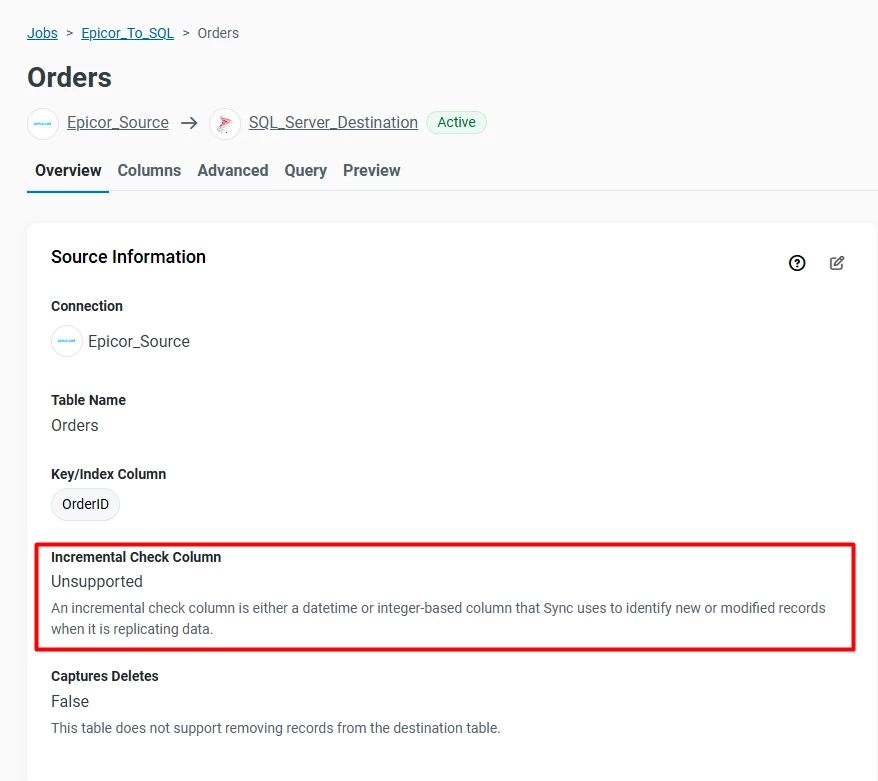
If you believe that your table includes a column that reliably tracks recent changes and can be filtered on the server side, feel free to modify the Query section and include that column in the query using the following statement: WITH IncrementalCheckColumns = ‘YourColumn’
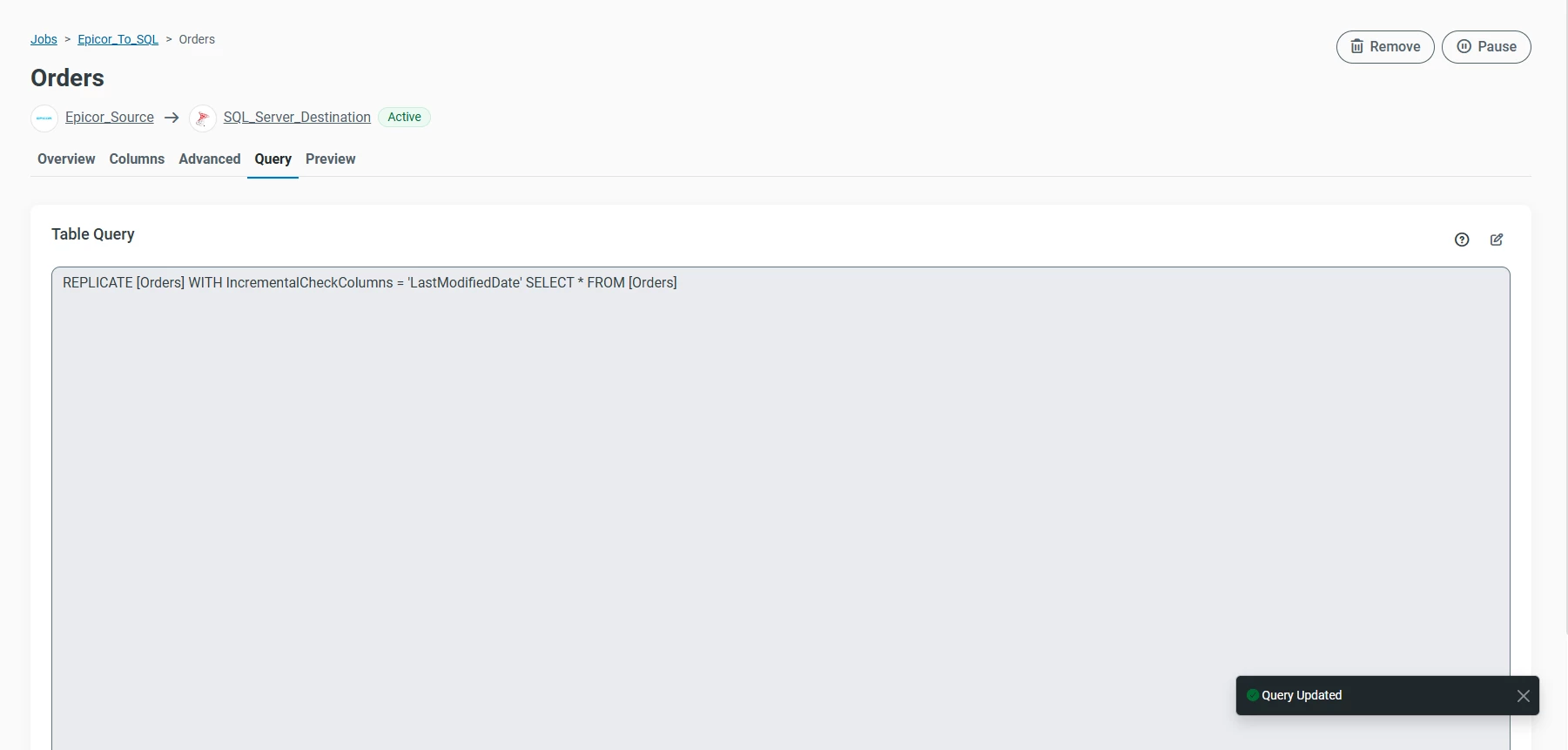
This adjustment forces the replication engine to filter data based on the specified column, allowing you to implement incremental replication.
If the table does not contain a column capable of tracking changes, then a full load is the recommended approach. Without a reliable tracking mechanism, other methods may lead to inconsistent or inaccurate data.



Enter your E-mail address. We'll send you an e-mail with instructions to reset your password.